Choosing the right led wiring harness can determine whether a lighting system performs reliably or fails after one wet season. Global buyers face different vehicle platforms, voltage ranges, connector standards, weather conditions, and installation habits. A harness that works well in a dry warehouse may struggle beside a hot engine or under constant vibration.
In my experience reviewing lighting assemblies, small details often create large problems. Poor crimping leaves exposed copper. Thin insulation cracks near sharp bends. An unsealed connector may collect water like a tiny cup. These failures are not always visible during assembly. They appear later, often at the worst possible time.
Dr. Robert J. Miller, a wiring-systems reliability specialist, states, “A harness is only as reliable as its weakest connection.” That principle guides this guide. Each led wiring harness type will be examined through practical criteria, including conductor size, connector design, sealing method, temperature resistance, flexibility, and installation speed.
The following list compares ten harness types used across commercial lighting, automotive applications, industrial equipment, signage, and architectural projects. It also considers sourcing realities, such as custom lengths, batch consistency, labeling, testing records, and supplier communication. Some buyers focus heavily on price. That can be understandable, but it may overlook replacement labor and field failures.
No harness is perfect for every project. Even a well-designed assembly may require revisions after testing. A connector may fit electrically but fail mechanically. A cable may pass a bench test yet bend poorly in production. Careful buyers leave room for that uncomfortable lesson.
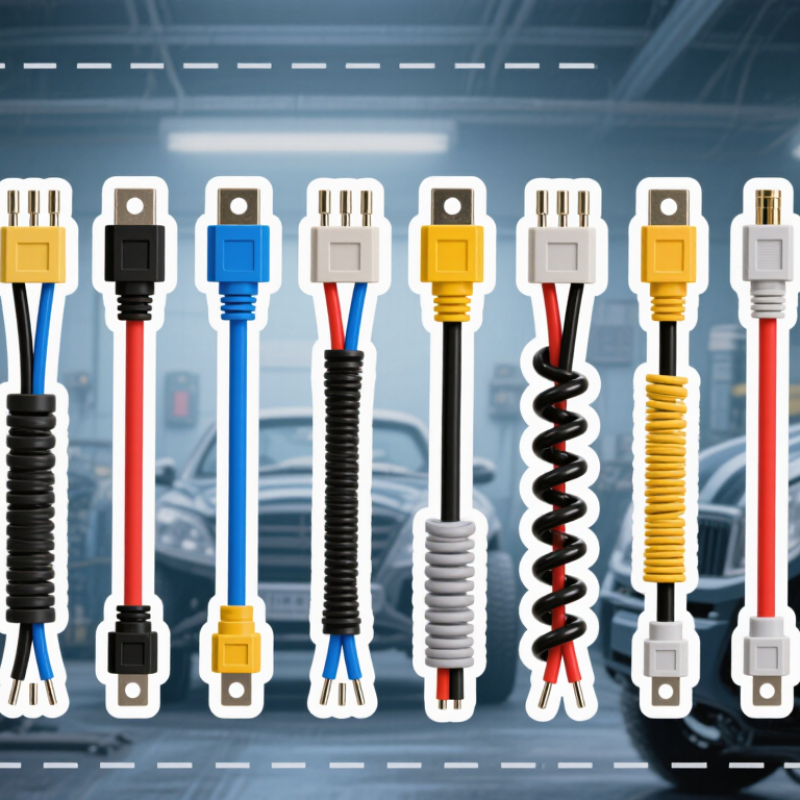
LED wiring harnesses connect lamps to a stable power source through organized, protected wiring.
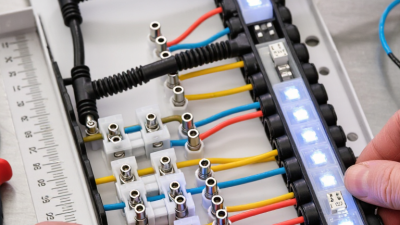
A basic harness usually includes copper conductors, insulation, terminals, connectors, seals, and protective sleeving. Wire gauge must match current demand, cable length, and allowable voltage drop. A bright lamp can still perform poorly with undersized wiring.
The connector is more than a joining piece. It must resist vibration, moisture, heat, and accidental disconnection. Sealed terminals help in outdoor, marine, and vehicle applications.
Fuse holders, relays, switches, and grounding points also form important parts of the circuit. I usually check polarity twice before testing. One reversed connection can waste time.
Routing deserves practical attention.
Keep wires away from sharp edges, hot surfaces, and moving parts. Add strain relief near plugs and leave enough service length for maintenance. Labels make future repairs faster, especially when several LED circuits share one enclosure. Global buyers should verify voltage ratings, temperature limits, ingress protection, and local electrical requirements. The first design is rarely perfect. Even experienced installers sometimes overlook a small bend radius or weak mounting point. That detail can decide whether a harness lasts for years or needs early replacement.
Top 10 LED Wiring Harness Types for Global Buyers
Ten Common LED Wiring Harness Types by Application
LED wiring harness selection depends on current, moisture, vibration, and installation space. The International Energy Agency reports that lighting uses nearly 15% of global electricity, increasing pressure for efficient, serviceable LED systems. In field projects, the harness often fails before the LED module.
Common types include two-wire pigtails for basic lamps, sealed automotive harnesses for headlights, three-wire dimming leads for commercial fixtures, four-wire RGB harnesses, five-wire RGBW harnesses, COB strip connectors, addressable pixel harnesses, trailer-light harnesses, solar street-light harnesses, and DMX architectural harnesses. Each serves a different application. A silicone-sealed connector may suit a wet facade, while a compact pigtail fits a cabinet lamp.
The U.S. Department of Energy’s solid-state lighting research reports commercial LED efficacy above 150 lumens per watt in many product classes. That performance is wasted when thin conductors create voltage drop. For a 24-volt strip drawing 4 amperes, a small resistance increase can visibly dim the far end. I usually specify stranded copper, locking terminals, and strain relief after checking the cable length. It sounds basic. It is not always done.
IP-rated sealing, flame resistance, and temperature limits should match the installation environment. Certification records and batch testing improve buyer confidence, but suppliers sometimes provide incomplete data. That gap deserves more attention.
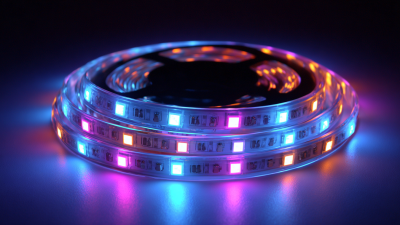
LED wiring harnesses differ sharply by load, location, and service conditions. A single connector rarely suits every installation. For strip-light harnesses, use compact locking connectors, flexible stranded wire, and heat-shrink protection. Bar-light harnesses need sealed connectors, thicker copper conductors, and abrasion-resistant split tubing. Floodlight harnesses often require weatherproof plugs, UV-rated cable, and an inline fuse near the power source. Spot-light harnesses benefit from keyed connectors, short voltage-drop paths, and braided sleeving around exposed sections.
For panel-light harnesses, low-profile connectors, fine-strand wire, and insulated terminals help conserve space. Work-light harnesses need vibration-resistant connectors, oil-resistant insulation, and reinforced conduit. Emergency-light harnesses should use clearly polarized connectors, fire-conscious insulation, and separate protection for control circuits. Trailer-light harnesses require sealed multi-pin connectors, flexible automotive cable, and waterproof junction boxes. Marine-light harnesses demand corrosion-resistant terminals, tinned conductors, and adhesive-lined heat shrink. Architectural LED harnesses usually use modular connectors, color-coded wire pairs, and concealed protective channels.
Wire size must match current, length, and ambient temperature, not appearance. I have seen thin conductors pass a bench test but overheat inside a crowded enclosure. That assumption failed. Check crimp quality with a pull test, then inspect voltage drop under real load. Protection should address moisture, rubbing, heat, and accidental strain. A fuse protects the circuit, but it cannot repair a weak connector. Some installations still need better labeling and service access; this detail is often underestimated. Testing after assembly remains essential.
Global buyers compare LED wiring harnesses by compatibility, safety, and measured performance, not appearance alone. The main options include single-lead, dual-lead, pigtail, extension, adapter, splitter, waterproof, molded, automotive, and custom harnesses. Each type fits a different installation condition.
Compatibility starts with voltage, connector geometry, polarity, wire gauge, and terminal locking force. A harness may fit physically but fail electrically. The U.S. Department of Energy reports that quality LED systems can use at least 75% less energy than incandescent lighting. That advantage disappears when undersized wires create voltage drop. For outdoor applications, buyers should check ingress protection, ultraviolet resistance, and sealing performance. IEC 60529 testing provides a practical reference for enclosure protection.
Safety comparisons should include insulation temperature, current capacity, strain relief, and short-circuit behavior. Automotive and industrial buyers often review ISO 16750 environmental tests, including vibration, humidity, and thermal cycling. The International Energy Agency notes that LED products can last many times longer than incandescent lamps, but the harness can reduce that benefit. I have seen specifications overlook terminal heating during continuous operation. That is a costly blind spot. A 24-hour burn-in test, pull test, and voltage-drop measurement reveal more than a polished datasheet. Procurement teams should request traceable test records, not just compliance claims.
Top 10 LED Wiring Harness Types for Global Buyers
International buyers should evaluate LED harnesses against operating conditions, not appearance alone. Common types include sealed two-pin, three-pin, multi-branch, right-angle, panel-mount, extension, relay-controlled, dimming, sensor, and custom molded harnesses. Each requires suitable wire gauges, terminals, insulation, and connector locking strength.
Standards reduce costly misunderstandings. IEC 60598 supports luminaire safety requirements, while ISO 16750 helps assess automotive electrical components under vibration, temperature, moisture, and chemical exposure. CISPR 25 is useful when LED harnesses operate near communication systems. The 2025 IEA Global EV Outlook reports more than 17 million electric cars were sold globally in 2024. This growth increases demand for compact, vibration-resistant lighting assemblies.
Customization should cover cable length, pin count, sealing grade, bend radius, labeling, and regional approvals. A supplier should provide material certificates, crimp-force records, continuity tests, insulation tests, and traceable inspection reports. I have found that a clean sample can still hide weak crimping. This matters.
Ask for salt-spray results, thermal-cycle data, and batch-level photographs. Confirm whether testing covers the finished harness or only individual connectors. Supplier audits should review process control, change notification, packaging, and capacity. The 2023 IPC/WHMA-A-620 standard remains a useful workmanship reference for cable and harness assemblies, although buyers should verify its application for their product category. Price comparisons alone are unreliable; a cheaper harness may use thinner insulation or inconsistent terminal plating.