2026 How to Choose the Right LED Wire for Your Project?
Choosing the right LED wire for your project can be overwhelming. With numerous options available, it's crucial to understand your specific needs. LED wire is versatile and widely used in various applications, from DIY crafts to commercial displays. This guide aims to simplify your decision-making process.
Consider the thickness, length, and color of the LED wire. Each project may require different specifications. A thicker wire may provide better power delivery, but can also be less flexible. If your design involves tight spaces, a thinner wire could be more suitable.
Remember that quality matters. Not all LED wires are created equal. Some may not provide the brightness you desire. Researching brands and customer reviews can save you from potential disappointments. Take your time to reflect on your project goals before making a final choice. The right LED wire can greatly enhance your design, while the wrong one may lead to frustration.
Understanding Different Types of LED Wires Available in the Market
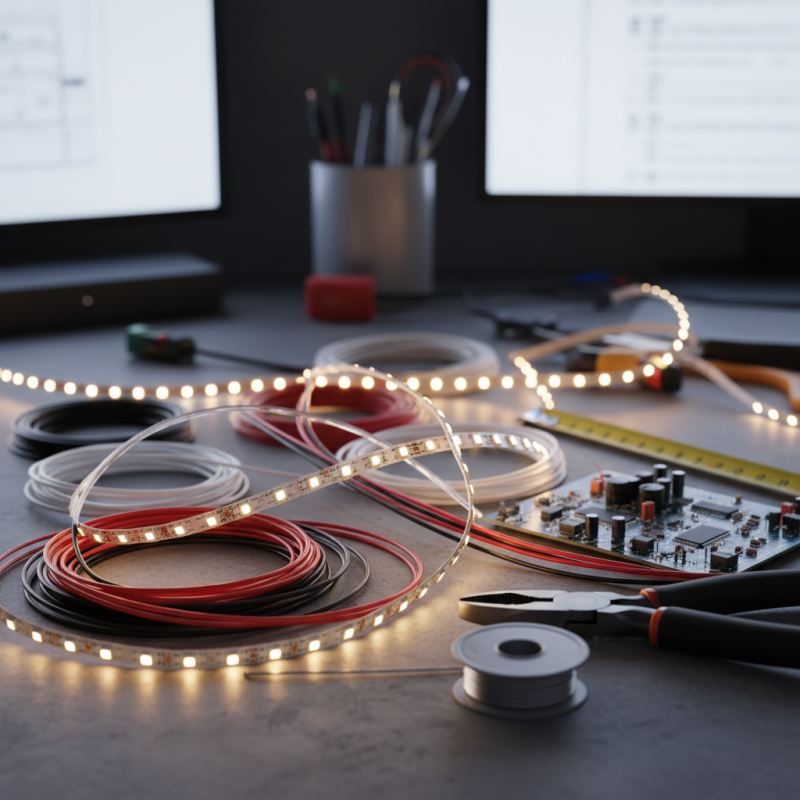
When choosing LED wires, it's essential to recognize the different types available. The market offers several options, including solid-core and stranded wires. Solid-core wires are rigid, making them suitable for fixed installations. They provide a stable connection and resist damage well. On the other hand, stranded wires are more flexible. They can bend easily, making them ideal for applications that require movement.
Another consideration is the gauge of the wire. A lower gauge number indicates a thicker wire, which can carry more current. This is crucial for larger projects that require higher power levels. However, thicker wires can be cumbersome. Sometimes, using a thinner gauge can make installation easier, but it may limit the current the wire can safely carry. Assessing your project’s power needs is necessary.
Additionally, consider the insulation material. PVC is common and cost-effective, but it may not withstand extreme temperatures. Other materials, like silicone, offer better flexibility and heat resistance. Mistakes in wire selection can lead to project failures. Taking the time to research and select the right type of LED wire will be worth the investment.
LED Wire Types and Their Average Brightness (Lumens)
Key Factors to Consider When Selecting LED Wire for Your Project
When selecting LED wire for your project, several key factors warrant careful consideration. The wire material often impacts performance. Copper is the preferred choice due to its excellent conductivity. A study from the International Lighting Association found that copper wires can reduce energy loss by up to 30%. This can make a significant difference, especially in large installations.
The length of the wire also plays a crucial role. Longer wires may experience voltage drop, affecting brightness. According to industry standards, a drop of more than 10% can lead to noticeable dimming. Engaging with the project’s specific power requirements is a must. Different LEDs have varying voltage and current needs, and a mismatch can compromise the outcome.
Moreover, environmental factors should not be overlooked. LED wires may face exposure to moisture or extreme temperatures. Selecting wires with proper insulation is essential for durability and safety. Reports indicate that poor insulation can lead to failures in up to 15% of projects. Reflecting on these factors can help avoid common pitfalls and ensure a successful LED implementation.
Assessing the Voltage Requirements for Your LED Project
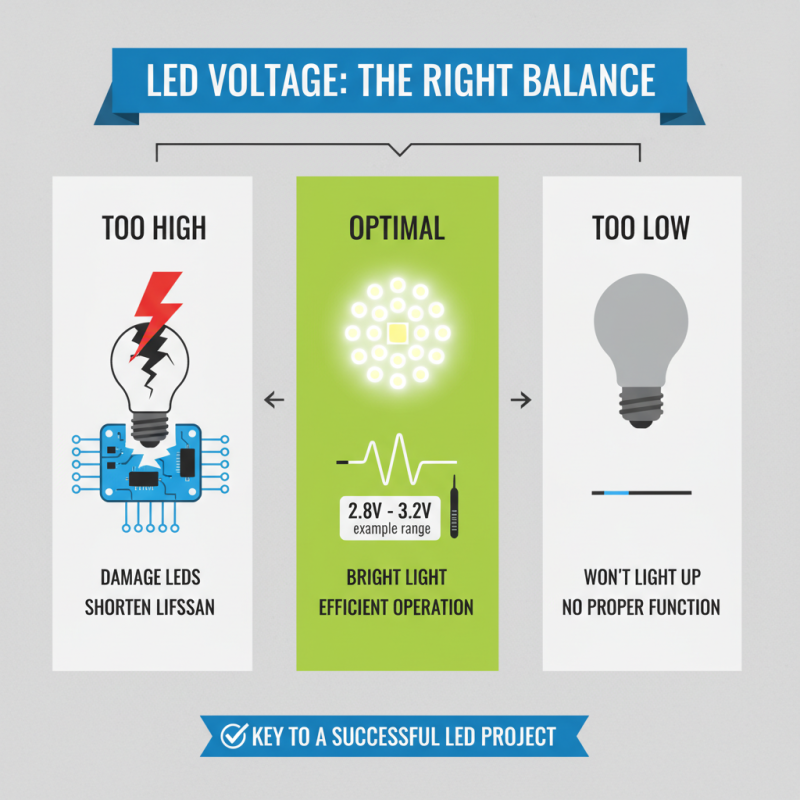
When starting an LED project, understanding voltage requirements is crucial. Different LED types operate within different voltage ranges. If the voltage is too high, it can damage the LEDs. Too low, and they won’t light up. This balance is essential for a successful project.
Tips for choosing the right voltage: Check the LED specifications carefully. They usually indicate the required voltage. Also, consider the power source. Ensure it matches the voltage needed for your LEDs. You may need a resistor for additional control. Don’t overlook this small but vital component.
Testing your setup is often overlooked. Use a multimeter to ensure proper voltage. Doing this helps prevent mishaps. Sometimes, wires or connections can be faulty. A little patience in testing can save time later. Always be alert for any signs of overheating.
Evaluating Heat Resistance and Insulation of LED Wires
When choosing LED wires, heat resistance and insulation are critical factors. LED installations may experience varying temperature conditions. High-quality wires can resist heat from prolonged use. The International Electrotechnical Commission (IEC) suggests that wires should withstand at least 90°C to ensure longevity.
Insulation type plays a vital role in performance. PVC insulation is common but may fail under extreme heat. In contrast, silicone insulation offers superior heat resistance. An industry report shows that wires with silicone insulation can maintain performance at temperatures above 150°C.
However, some projects may not require such high insulation ratings. Evaluating the specific environment is crucial. For example, an outdoor installation may face harsher conditions than a controlled indoor setting. It’s important to balance insulation needs with cost-effectiveness often leads to second-guessing. Achieving an ideal solution demands careful consideration of both heat exposure and insulation choices.
Comparing Costs and Quality of LED Wires for Budget Planning
When selecting LED wires for your project, cost and quality are crucial. The type of wire can significantly affect your budget. Cheaper wires might save money upfront, but they can require more frequent replacements. This could lead to higher costs over time. Quality wires, although more expensive initially, often provide better durability and efficiency.
Tip: Always check the specifications. Understand the wire’s gauge and insulation type. A thicker wire often carries more current but may be less flexible. Evaluate what works best for your specific project needs. Sometimes, you need to balance between flexibility and durability.
Do not ignore the installation environment. Wires exposed to moisture or extreme temperatures require special materials. A low-cost option may not stand up to these challenges. Reflect on the long-term performance. Are you prepared for future costs?
Consider investing in a reliable product to avoid unexpected issues down the line.